

Busy hospital hours can place significant pressure on nursing teams. When several patients need attention at once, alerts can compete for staff attention, increasing the risk of delayed responses. Overloaded nursing stations, shift changes, and older manual systems can make this harder to manage. Patients and families may become dissatisfied when requests are not answered promptly.
A well-planned alert system can help hospitals organise incoming calls, identify urgency, and support a more consistent response process by leveraging smart technology to improve hospital safety.
What Happens When Patient Alerts Get Missed During Peak Hours?
Missed alerts during peak hours can create operational and patient-care challenges. When multiple requests arrive at once, staff may struggle to identify which calls need immediate attention and which can safely wait.
Here’s what happens?
- Delayed responses: A patient may have to wait longer for a staff member to respond.
- Competing alerts: Multiple calls arriving simultaneously can make it harder to recognise urgent needs.
- Nursing station overload: Staff handling several tasks may struggle to track every incoming request manually.
- Patient dissatisfaction: Repeated delays can affect how patients and families perceive the hospital’s responsiveness.
- Workflow pressure: Nurses may spend additional time checking, prioritising, and following up on requests instead of focusing on other responsibilities.
What Is a Nurse Call System and How Does It Actually Work?
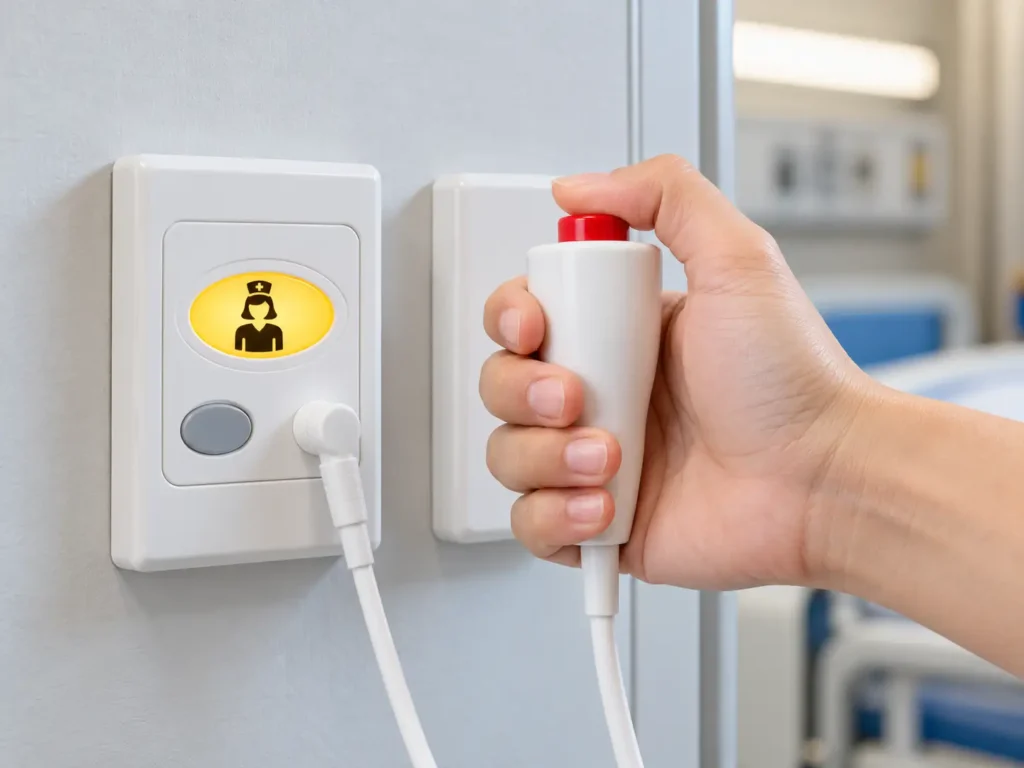
A communication network that lets patients or residents in medical facilities instantly alert nurses and caregivers when they need help
How It Works?
- Patient initiates a call: A patient uses the available bedside or room-based control to request assistance.
- Alert is transmitted: The system sends the request through its connected communication infrastructure.
- Staff receives the notification: The alert reaches the designated nursing station or staff device, depending on the system configuration.
- Response follows: Staff identify the request and attend to the patient according to its urgency and the hospital’s response process.
The communication infrastructure supporting these alerts is part of a wider hospital technology environment. This is where our hospital information technology and infrastructure services can support the connectivity required across patient and staff areas.
What Are the Core Components of a Nurse Call System?
- Patient call points: Allow patients to request assistance.
- Staff stations or displays: Provide a place to receive and identify incoming calls.
- Room indicators: Can show where an active request originated.
- Communication infrastructure: Connects patient areas with the designated receiving points.
How Does an Alert Travel From Patient to Nursing Station?
The alert moves through the system from the patient’s call point to the designated staff receiving point. This lets staff identify and handle the request without relying on someone noticing a patient calling out.
- Call initiation: The patient activates the control when they need assistance.
- Signal transmission: The request travels through the system’s communication network.
- Location identification: The receiving point indicates where the request originated.
- Staff response: The appropriate team member can respond based on the alert and its urgency.
Why Do Missed Alerts Happen So Often in Busy Hospitals?
Busy periods can increase the risk of missed or delayed responses when the alert process depends heavily on manual handling or limited staffing.
Several operational factors can contribute.
- Shift changes: Temporary staffing gaps or handover periods can make response management more difficult.
- Understaffing: Fewer available staff members may have to manage several patient requests simultaneously.
- Legacy systems: Older or manual processes may provide limited support for organising and prioritising incoming calls.
- Poor prioritisation: Treating routine and urgent requests in the same way can make it harder to identify which needs require faster attention.
How Does a Modern Nurse Call System Prevent Missed Alerts?
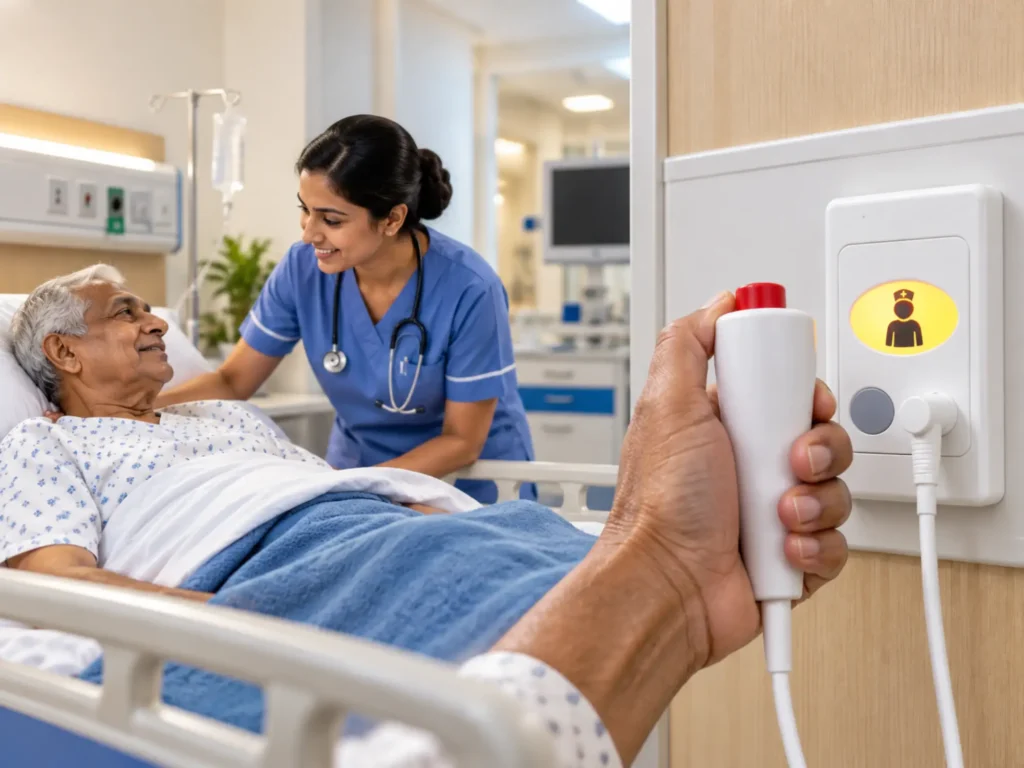
A modern setup can reduce the chance of an alert being overlooked by helping staff identify, prioritise and respond to requests more systematically.
- Clear notifications: Staff can see when an alert is generated and where it originated.
- Prioritisation: Different urgency levels can be managed according to predefined response requirements.
- Mobile communication: Alerts can reach designated staff devices instead of remaining limited to a single location.
- Escalation: Unanswered requests can be redirected according to established protocols.
- Integrated workflow: Communication with other hospital systems can support a more connected response process.
How Does Call Prioritisation Improve Response Time?
It helps staff focus on urgent requests before routine ones. This reduces the need to treat every incoming call as equally urgent.
- Urgent requests: Higher-priority alerts can reach staff sooner.
- Routine requests: Lower-priority needs can remain visible without competing equally with emergencies.
- Clearer workload: Staff can better understand which requests require immediate action.
- Faster decisions: A structured priority system can reduce time spent deciding which alert to handle first.
How Does Integration With Mobile Devices Help Nursing Staff?
Mobile integration can help staff receive alerts beyond a fixed nursing station. This makes communication more flexible when nurses move between patient rooms or work across different areas.
- Direct notifications: Alerts can be delivered to designated mobile devices.
- Mobility: Staff can receive information while away from the central station.
- Faster awareness: Important requests can reach the appropriate team member without depending on a single physical location.
- Better coordination: Mobile communication can help staff organise responses when several requests are active.
As communication moves beyond the nursing station, connected systems help improve hospital safety by helping staff receive and act on important information more efficiently.
How Do Escalation Protocols Ensure No Alert Goes Unanswered?
They provide a defined process for handling alerts that go unanswered within the required time. They help prevent unanswered requests from going unnoticed.
- Response time: A predefined period can determine when an unanswered alert needs further action.
- Automatic escalation: The system can redirect the request to another designated staff member or response point.
- Clear responsibility: Defined escalation paths help staff understand who should respond next.
- Urgent situations: Higher-priority requests can follow stricter response procedures.
- Accountability: A structured process makes it easier to identify whether an alert was acknowledged and acted upon.
What Are the Real Benefits of a Well-Designed Nurse Call System?
A well-designed system can support patient safety, faster responses and a more organised staff workflow. Its value extends beyond simply notifying nurses that a patient needs assistance.
- Patient safety: Timely communication can help staff respond to patient needs more consistently.
- Faster response times: Prioritised and clearly routed alerts can reduce avoidable delays.
- Lower liability exposure: Better documentation and response processes can help hospitals manage operational risk.
- Patient satisfaction: More consistent responses can improve the patient and family experience.
- Staff workflow efficiency: Organised alerts can reduce the need for staff to manually track every request.
Why Should Nurse Call Systems Be Planned During Hospital Construction, Not After?
Planning the system during construction can make integration more straightforward than adding it after the building is complete. Early planning lets you consider the communication infrastructure alongside the rest of the facility.
- Cabling: You can incorporate required pathways and connections before walls and finishes are complete.
- IT infrastructure: You can coordinate network requirements with the hospital’s wider technology systems.
- MEP coordination: You can plan electrical and other building services around the system requirements.
- Retrofitting: Installing equipment later may involve additional structural work, disruption and coordination.
- Future needs: Early planning can ensure capacity and scalability are considered before construction is finalised.
These requirements are easier to coordinate when considered alongside the building design, making early planning through hospital project consultancy a practical part of the process.
What Should Hospital Administrators Look for When Choosing a Nurse Call System?
A suitable system should match the hospital’s current requirements while allowing room for future expansion. Selection should consider how the system will connect with existing technology and how reliably the vendor can support it.
- Scalability: The system should accommodate future changes in bed capacity, departments or operational requirements.
- HMIS integration: Compatibility with hospital information management software can support a more connected technology environment.
- Wireless or wired setup: The choice depends on the building, infrastructure, installation requirements and operational needs.
- Vendor support: Reliable technical support is important for installation, maintenance and troubleshooting.
- Infrastructure compatibility: The system should work with the hospital’s planned IT and communication infrastructure.
Compatibility becomes especially important when the nurse call system needs to communicate with hospital information management systems we implement and other digital platforms used across the facility.
Frequently Asked Questions
What is a nurse call system used for in hospitals?
It allows patients to request assistance and helps staff receive, identify and respond to those requests. The system can support organised communication between patient areas and the designated care team.
How much does a hospital nurse call system cost to install?
Costs vary by system design, hospital size, infrastructure, technology, number of patient areas, and installation requirements. A project-specific assessment is needed for an accurate estimate.
Is a wireless or wired nurse call system better for hospitals?
Neither is universally better. The appropriate configuration depends on the building, existing infrastructure, installation constraints, scalability requirements and how the hospital plans to operate the system.
Can a nurse call system integrate with hospital information management (HMIS) software?
Yes, compatible systems can integrate with HMIS software. Integration requirements depend on the platforms involved, available interfaces and the hospital’s technology architecture.
How does a nurse call system help during staff shortages or busy shifts?
It can help organise incoming requests when staff are managing multiple demands. Prioritisation, mobile notifications and escalation can support more structured responses during periods of higher workload.
What features should a modern hospital nurse call system have?
Useful features can include clear notifications, prioritisation, mobile communication, escalation and system integration. The required configuration should reflect the hospital’s size, workflow and technology infrastructure.
Is it better to plan the nurse call system during hospital construction or add it later?
Yes. Planning it during construction allows you to coordinate cabling, IT infrastructure, and other building services from the start. Retrofitting may require additional work after completion.
How does a nurse call system improve patient satisfaction scores?
It can support more consistent responses to patient requests. When communication is organised and delays are reduced, patients may experience a more responsive care environment.
What’s the difference between a basic and an advanced/smart nurse call system?
Basic configurations may focus primarily on sending and receiving requests, while advanced systems can add prioritisation, mobile communication, escalation and integration capabilities.
How long does it take to install a nurse call system in a new hospital project?
There is no single installation timeline. Duration depends on hospital size, system complexity, construction stage, cabling, integration requirements and coordination with other infrastructure.
Conclusion: Build Patient Safety Into the Foundation, Not as an Afterthought
Treat a nurse call system as part of the hospital’s core communication and safety infrastructure, not an add-on after construction is complete. Early planning helps patient communication, IT infrastructure, cabling, and building services work together.
As leading nurse call and access control system suppliers in Kolkata, we welcome you to explore our turnkey hospital construction services when planning these requirements as part of a complete facility.
If you prefer to speak to us, get in touch today!