
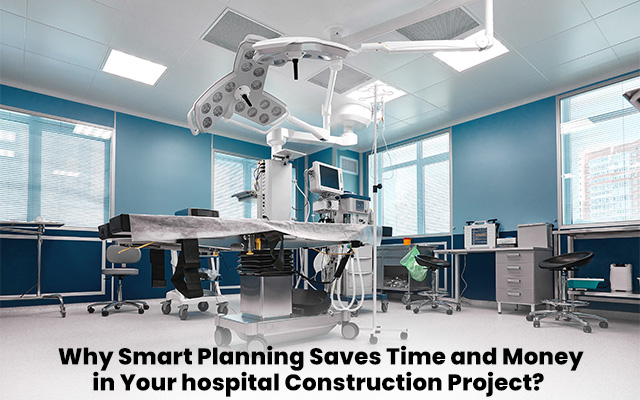
Building a hospital can feel like a daunting task. There are numerous factors to consider like budgets, designs, and timelines. You must ensure that all necessary resources are in place to meet the community’s healthcare needs.
Whether you are in charge of a new hospital project or expanding an existing facility, one thing is certain: Smart planning is crucial to saving both time and money.
When planning is done properly, it minimises delays, reduces costs, and ensures the construction process runs smoothly.
As a hospital manager, administrator, or healthcare investor, you want a well-executed project that doesn’t compromise quality or stretch the budget. That’s where effective planning comes in.
In this blog, you will explore the importance of smart planning and the guiding principles for planning hospital services and facilities, as outlined by our experts.
Why is Planning Important in Hospital Management?
In hospital management, planning is the backbone of successful operations, not just during the construction phase but throughout the facility’s lifecycle. Planning helps identify potential challenges early on, allowing project managers to mitigate risks and avoid unnecessary expenses.
It also facilitates better resource allocation, ensuring materials, manpower, and time are used efficiently. Smart planning doesn’t just save you money; it helps you build a facility that will operate smoothly and effectively for years to come.
What Are the Guiding Principles in Planning Hospital Facilities and Services?
When planning a hospital construction project, there are several guiding principles to keep in mind:
- Patient-Centric Design: The layout and infrastructure should be focused on the needs of the patients, making the environment conducive to healing.
- Compliance with Regulations: Healthcare facilities must adhere to strict local, state, and national building codes. Planning should include consultations with experts in healthcare laws and regulations to avoid costly adjustments later.
- Sustainability and Efficiency: Green building practices and energy-efficient systems can lead to significant long-term savings on utilities and maintenance.
- Flexibility for Future Growth: Hospital needs to evolve over time. It’s essential to design spaces that are flexible and can be easily modified to accommodate new technologies and departments.
- Safety and Accessibility: A hospital is a place of care, so its design should prioritize patient safety and accessibility.
What Are the 7 Steps in the Planning Process?
Planning a hospital construction project involves several structured steps. Here are the key phases in the planning process:
- Initial Needs Assessment: This first step involves identifying the hospital’s goals, target patient base, and services to be offered.
- Feasibility Study and Budgeting: A thorough feasibility study evaluates the project’s potential, including cost estimates, available funding, and overall market conditions.
- Design and Layout Planning: Once the goals are clear, the architectural team works on creating floor plans, 3D designs, and layout maps that maximize the space’s functionality and flow.
- Regulatory Approval and Permits: Before construction can begin, obtaining the necessary permits and ensuring compliance with building codes, healthcare regulations, and safety standards is a critical step.
- Construction Planning: This phase involves scheduling and coordinating the construction process, including sourcing materials, hiring contractors, and creating a timeline that ensures the project stays on track.
- Equipment Procurement: Hospitals require specialized equipment, from surgical tools to medical imaging systems. Planning for the acquisition and installation of these systems is essential to avoid delays and ensure proper setup.
- Final Inspection and Handover: Before the hospital opens its doors to the public, a final inspection is conducted to ensure everything is in place and up to code. This is followed by the handover to the hospital management team, who can then begin operational preparations.
So, whether you are starting a new hospital or expanding an existing one, ensure that you partner with the best turnkey hospital construction company in Kolkata that understands the intricacies of healthcare facility planning. Our expertise will guide you through the process and help turn your vision into a reality.
Conclusion
The success of your hospital construction project hinges on one key factor: Smart planning. By setting clear goals, following guiding principles, and adhering to a structured planning process, you ensure that the project runs on time, stays within budget, and meets the highest standards of quality.
Contact Infinity Devcon, a leading turnkey hospital construction company in Kolkata, today and ensure your project’s success from start to finish.