
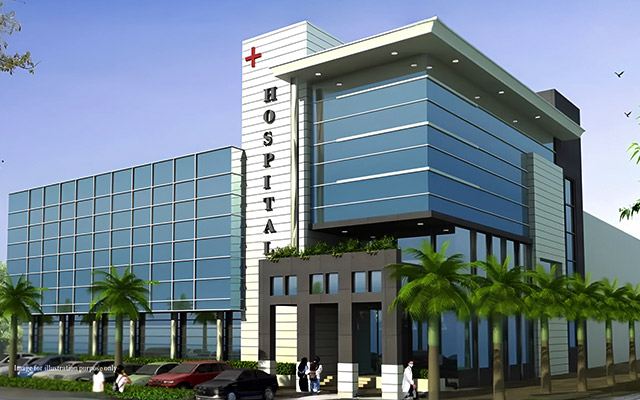
Kolkata’s healthcare infrastructure is undergoing a structural rethink, and smart hospitals are at the centre of this shift. Smart hospitals combine advanced technology with clinical and operational systems to deliver more efficient, patient-focused, and data-driven care.
Across the city, both existing and upcoming healthcare facilities are embracing these innovations, evolving from basic digital setups into fully integrated, intelligent ecosystems. This shift reflects the growing need to handle higher patient volumes, improve safety standards, and meet rising expectations for healthcare quality.
In this blog, you will learn about the key features and design elements of smart hospital infrastructure, how they differ from conventional hospitals, and the role a hospital construction firm in Kolkata plays in bringing these future-ready facilities to life.
What Makes a Hospital “Smart”?
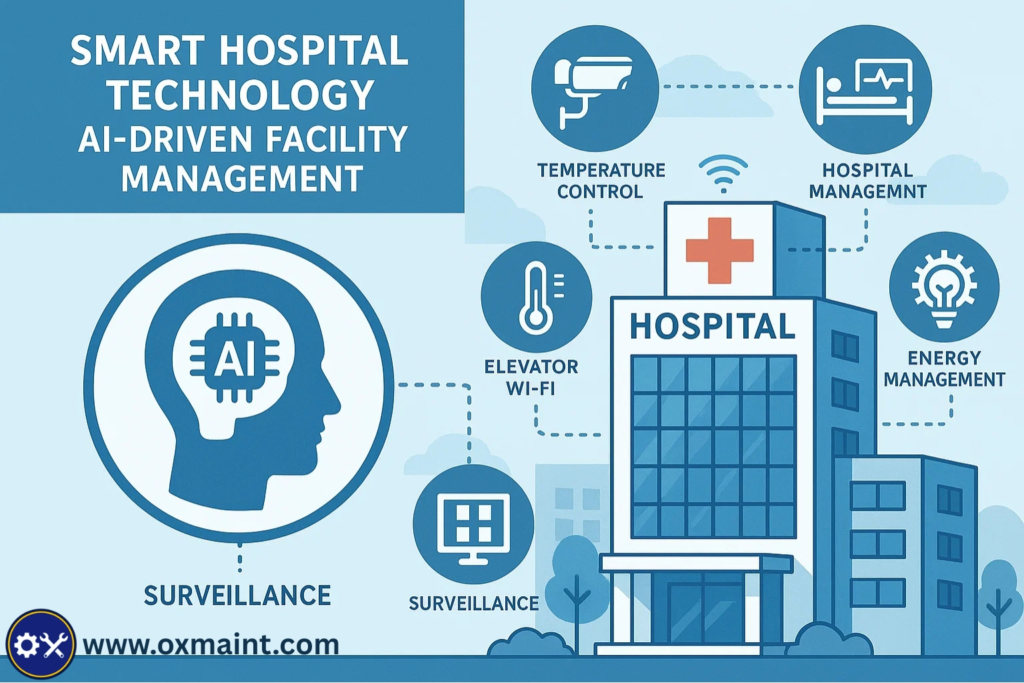
A hospital becomes “smart” when technology is embedded into its very infrastructure, not layered on as an afterthought. Smart hospitals connect clinical systems, building operations, and patient data into a single, intelligent network that enables real-time decision-making.
This integration allows hospitals to move from reactive care to predictive and preventive care models. Systems continuously collect and analyse data, helping medical teams respond faster, reduce errors, and optimise treatment outcomes.
From digital nurse stations to central command centres, every element of a smart hospital is designed to support seamless coordination between people, processes, and technology.
How Smart Hospitals Are Changing the Healthcare Experience
Smart hospitals are making significant strides in improving healthcare delivery, and Kolkata is at the forefront of this change. By redesigning infrastructure around digital systems, these hospitals enhance both patient experience and operational performance.
Here’s how smart hospitals are transforming healthcare delivery:
Improved Patient Experience
Smart hospitals place patients at the centre of the care ecosystem, using technology to reduce stress, confusion, and delays.
- Personalised Experience
Smart hospitals provide a more personalised experience by using patient data to tailor care pathways, room settings, and treatment plans. - Online Access
Patients can securely access their medical records online, making it easier to track reports, prescriptions, and treatment history. - Digital Appointment Booking
Appointment scheduling is streamlined through digital platforms, reducing long queues and administrative delays. - Personalised Treatment
Advanced systems analyse patient history and clinical data to support personalised treatment recommendations. - Hospital Automation
Automated notifications keep patients informed about appointment timings, procedures, test results, and discharge updates in real time.
Increased Efficiency in Operations
Operational efficiency is one of the strongest advantages of smart hospital infrastructure. Automation and digital workflows significantly reduce administrative burden.
- Automation of Manual Processes
Repetitive tasks such as billing, record updates, and scheduling are automated, improving accuracy and speed. - Better Resource Use
Digital systems help hospitals allocate staff, beds, and equipment more efficiently. - Managing Patient Flow
Smart systems monitor patient movement across departments, helping reduce congestion and bottlenecks. - Minimised Wait Times
Automated scheduling and real-time updates shorten patient wait times across OPDs and diagnostics. - Fewer Medical Record Errors
Digital records reduce duplication, data loss, and manual entry errors. - More Focus on Patient Care
Healthcare providers spend less time on paperwork and more time delivering quality care.
Better Resource Management
Efficient resource management is critical for large healthcare facilities, and smart hospitals excel at it.
- Efficient Resource Management:
Smart infrastructure provides real-time visibility into resource usage across departments. - Smart Inventory Systems:
Automated inventory tracking ensures essential medical supplies are always available without overstocking. - Predictive Maintenance:
Equipment sensors predict maintenance needs in advance, reducing downtime and preventing unexpected failures.
Differences Between Traditional and Smart Hospitals
| Feature | Traditional Hospitals | Smart Hospitals |
| Technology Integration | Limited tech usage | Full tech integration |
| Patient Interaction | In-person visits | Telemedicine and automation |
| Infrastructure | Basic layouts, fixed designs | Flexible, modular designs |
| Resource Management | Manual inventory tracking | Smart inventory and predictive maintenance |
| Energy Efficiency | Conventional systems | Green technologies and smart systems |
| Data Management | Paper-based records | Cloud-based, real-time data management |
This comparison highlights how smart hospitals are built not just to treat patients, but to operate efficiently at scale.
Infrastructure Elements That Define Smart Hospitals
Smart hospitals are designed as connected environments where infrastructure and technology work together seamlessly.
Infrastructural elements include:
- Digitally enabled nurse stations for faster coordination
- Automated pharmacy units linked to patient records
- Smart ICUs with continuous monitoring systems
- Telemedicine suites for remote consultations
- Central command centres for real-time operational oversight
Building management systems (BMS) play a vital role by controlling lighting, ventilation, temperature, and energy usage in real time. These systems not only improve patient comfort but also reduce operational costs and energy consumption, which are increasingly important factors in large healthcare facilities.
Additionally, modular construction techniques are being adopted to allow hospitals to expand or reconfigure departments without disrupting ongoing services. This flexibility is essential in a city like Kolkata, where healthcare demand continues to rise.
Sustainability and Energy Efficiency in Smart Hospital Design
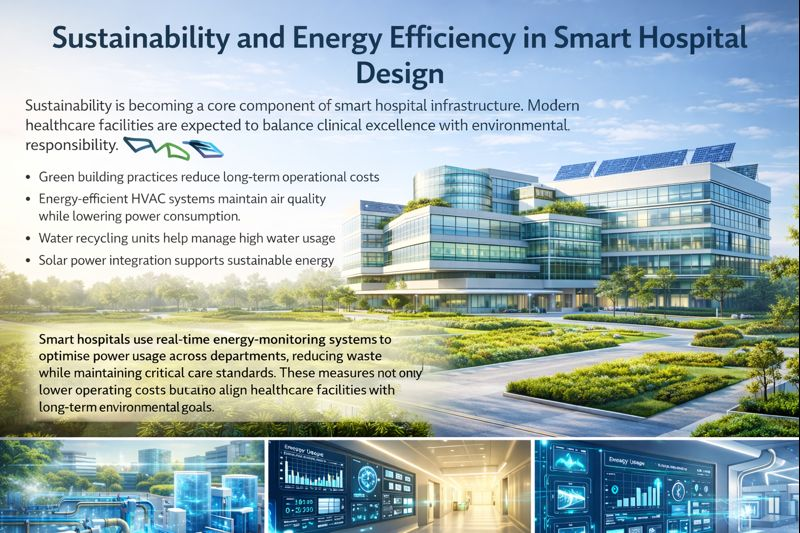
Sustainability is becoming a core component of smart hospital infrastructure. Modern healthcare facilities are expected to balance clinical excellence with environmental responsibility.
- Green building practices reduce long-term operational costs
- Energy-efficient HVAC systems maintain air quality while lowering power consumption
- Water recycling units help manage high water usage
- Solar power integration supports sustainable energy needs
Smart hospitals use real-time energy-monitoring systems to optimise power usage across departments, reducing waste while maintaining critical care standards. These measures not only lower operating costs but also align healthcare facilities with long-term environmental goals.
For any hospital construction firm in Kolkata, integrating sustainability at the design and construction stage is no longer optional it is a strategic necessity for future-ready healthcare infrastructure.
Challenges in Developing Smart Hospitals in Kolkata
While the shift toward smart hospitals is accelerating, it does come with challenges.
- Retrofitting older hospital buildings requires careful planning
- Initial investment costs are higher than conventional construction
- Data security and system integration need specialised expertise
- Skilled technical staff are required to manage advanced systems
However, these challenges are being addressed through phased construction, scalable infrastructure planning, and stronger collaboration between healthcare providers and construction specialists. Over time, the operational efficiencies and improved patient outcomes significantly outweigh the initial complexities.
The Future of Hospital Infrastructure
As hospital construction firms continue to innovate, we can expect even more advanced features in healthcare facilities, including improved patient care, sustainable practices, and smarter resource management.
For healthcare providers, the rise of smart hospitals means a fundamental transformation in service delivery. For patients, it translates into quicker, safer, and more personalised care experiences.
As technology continues to evolve, smart hospitals will remain at the heart of the healthcare revolution in Kolkata.
Contact Infinity Devcon, a leading hospital construction firm in Kolkata, to build your smart healthcare facility. Call 033-48228018 today for expert consultation.
People Also Ask (FAQs)
- How do smart hospitals enhance patient privacy?
Smart hospitals use encrypted data systems to ensure patient information is securely stored and accessed only by authorised personnel. - What are the environmental benefits of building a smart hospital?
Smart hospitals reduce energy consumption and carbon emissions through green technologies such as solar panels and energy-efficient systems. - Can smart hospitals reduce medical errors?
Yes, automation and AI help minimise human errors in medication, diagnostics, and treatment decisions. - What are the most common technologies used in smart hospitals?
AI, IoT devices, telemedicine, and smart inventory systems are commonly used in smart hospitals to enhance efficiency and patient care. - How does AI improve the quality of healthcare in smart hospitals?
AI improves healthcare quality by providing accurate diagnostics, personalised treatments, and predictive analytics to improve outcomes.