
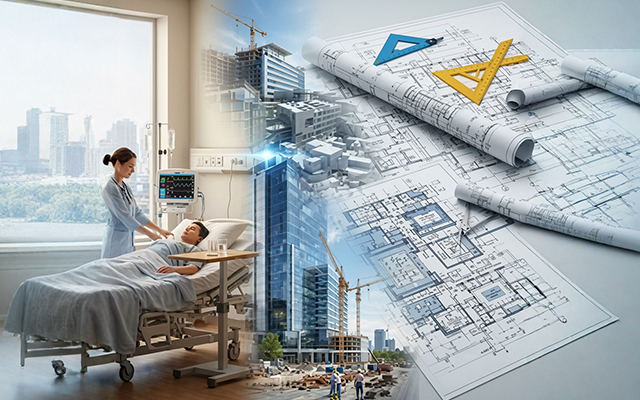
Hospitals feel crowded and confusing, which instantly increases stress. This happens due to unclear directions, long walks, and constant noise. Hospitals operate under constant pressure with high patient volumes, limited space, and older buildings.
In such settings, hospital design stops being about aesthetics and focuses on how smoothly care is delivered. To reduce confusion and create a comfortable environment for patients and their families, Infinity Devcon follows a practical approach for planning functional healthcare spaces.
This blog will help you understand how, from the first blueprint to the patient’s bedside, design shapes comfort, safety, and efficiency.
How hospital design shapes patient experience and recovery
Patients may not understand layouts or design plans, but they experience hospital design through everyday moments.
These moments often include:
- Finding the entrance without confusion
- Waiting in a space that feels calm, not overcrowded
- Resting in rooms with proper light, air, and privacy
- Moving between departments without stress or repeated questions
Know what factors make hospitals’ experience and recovery best for patients:
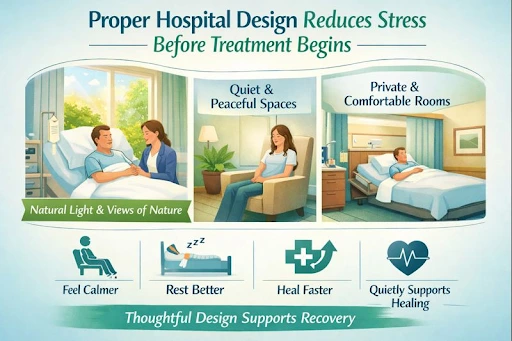
Access to natural light and nature
Hospitals that allow natural light and views of greenery naturally feel calmer. Large windows, healing gardens, and even nature-inspired interior visuals help reduce anxiety during hospital stays.
Research shows that such spaces can:
- Reduce stress and low mood
- Improve sleep quality
- Lower dependency on pain medication
- Support faster recovery
Even in dense city hospitals, thoughtful window placement and indoor greenery make wards feel less clinical and more human-centric. This will strengthen patient-centric hospital design.
Acoustic control for quieter healing spaces
Noise is one of the biggest stressors inside hospitals. Continuous sounds from equipment, trolleys, footsteps, and conversations disturb rest throughout the day.
Effective acoustic design usually includes:
- Sound-absorbing materials
- Quiet zones near patient rooms
- Decentralised nursing stations
- Thoughtful corridor planning
Lower noise levels help patients rest better and also reduce staff fatigue, supporting recovery without extra effort.
Private patient rooms and dignity in care
Single-patient rooms are increasingly becoming standard in modern hospitals.
They support:
- Lower infection transmission
- Better sleep and comfort
- Reduced medical errors
- Privacy during sensitive conversations
Private rooms also allow families to remain involved without disturbing others, improving both emotional comfort and safety.
Section Summary
Let’s help you visualise the above context so that you get a clear understanding:
How hospital design improves efficiency and staff performance
Behind every patient experience is a healthcare team working continuously. Design decisions directly affect how smoothly doctors, nurses, and support staff can do their jobs.
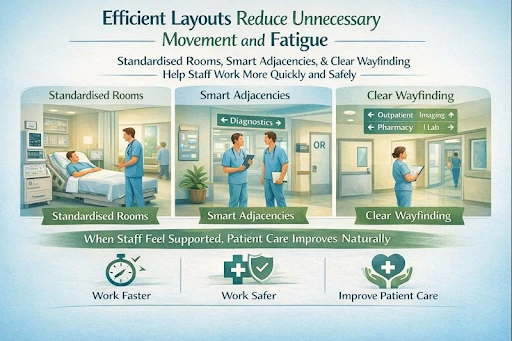
Standardised layouts and adaptable rooms
Standardised room layouts reduce confusion for staff. Equipment and supplies remain in familiar locations, even when staff move between rooms.
Acuity-adaptable rooms allow patients to stay in the same space even if their condition changes. This reduces:
- Frequent patient transfers
- Disruptions in care
- Physical strain on staff
- Loss of valuable time
This consistency is a core element of hospital workflow planning.
Optimised workflow and department placement
When essential services are placed far apart, staff lose time and energy moving across the hospital.
Smart planning places:
- Diagnostics near OPDs
- Emergency departments close to imaging
- ICUs near operating theatres
- Pharmacies near exits
This structured approach saves time, especially during emergencies, and is a key strength of hospital project consultancy and design services in Kolkata.
How layout planning affects daily hospital operations
| Design Factor | Without Proper Planning | With Smart Planning |
| Staff movement | Time-consuming | Faster response |
| Equipment access | Frequent delays | Easy availability |
| Emergency handling | Slower action | Efficient care |
| Staff fatigue | High | Reduced |
Intuitive wayfinding for patients and visitors
Getting lost inside hospitals increases frustration and anxiety, especially for families already under emotional stress.
Effective wayfinding includes:
- Clear signage (indicators)
- Colour-coded zones
- Logical department placement
- Simple architectural cues
This allows patients and visitors to move independently and saves staff time that would otherwise be spent giving directions.
Ergonomic design and staff respite areas
Ergonomic design focuses on making workspaces comfortable, safe, and easy to use for hospital staff. Proper desk heights, well-placed equipment, and smooth movement paths reduce physical strain. Access to natural light and quiet break areas helps staff recharge during long shifts.
Benefits of ergonomic design include:
- Reduced physical fatigue and body strain
- Lower staff burnout and work-related injuries
- Improved focus and work efficiency
- Better staff morale and retention
This keeps healthcare teams healthier and more attentive, which directly benefits patient care.
Section Summary: Why Design Supports Staff
Planning hospital designs for future growth and safety
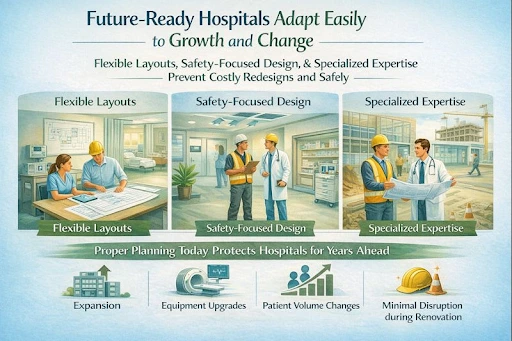
Hospitals rarely remain the same size or function for long. Patient numbers increase, services expand, and medical technology continues to evolve.
Planning with future growth in mind allows spaces to adapt without major disruptions. Flexible layouts, scalable departments, and safety-focused design help hospitals upgrade smoothly while maintaining daily operations.
Future-ready planning supports:
- Department expansion
- Equipment upgrades
- Changing patient volumes
- Minimal disruption during renovation
This foresight defines strong healthcare infrastructure planning, especially in growing urban areas like Kolkata.
Safety and hygiene through design
Safety is deeply connected to design. Poor circulation increases infection risk, while mixed pathways lead to unnecessary exposure.
Proper hospital design ensures:
- Clear separation of clean and utility zones
- Controlled patient movement paths
- Proper ventilation and lighting
- Safer emergency handling
These elements support safe care delivery quietly and effectively.
Why specialised healthcare design expertise matters
Hospital construction differs significantly from residential or commercial buildings. Clinical workflows, safety standards, and patient behaviour require specialised understanding.
Professionals offering medical facility design services translate healthcare needs into practical spaces that work every day, not just on drawings.
Section Summary
How consultancy connects planning with execution
Hospital projects involve architects, engineers, vendors, and authorities. Without coordination, delays and cost overruns become common.
Professional consultancy ensures:
- Practical planning from the start
- Smooth coordination across teams
- Fewer last-minute changes
- Controlled timelines
This integrated approach defines effective hospital planning and execution.
How Infinity Devcon supports smarter hospital design
Infinity Devcon works closely with healthcare providers to design hospitals that function smoothly in real-world conditions. Their approach balances patient comfort, staff efficiency, and long-term usability.
With strong local understanding, their expertise strengthens healthcare project management in Kolkata, helping facilities avoid common planning mistakes and operate efficiently from day one.
Design That Supports Healing
Hospital design works best when it stays unnoticed yet impactful. Patients feel calmer, staff move efficiently, and care flows smoothly without constant adjustments. From lighting and acoustics to layouts and workflows, every design decision quietly shapes daily hospital life.
In a city like Kolkata, where healthcare facilities operate under space and volume pressures, thoughtful planning becomes essential for long-term success.
Contact Infinity Devcon for a hospital project consultancy and design services in Kolkata, to build a smart healthcare facility that works seamlessly from blueprint to bedside.
Call 033-48228018 today for expert consultation.
People Also Ask (FAQs)
- How does hospital design improve patient recovery?
Natural light, quiet spaces, and clear layouts reduce stress and support better rest and healing.
- Why is standardised hospital layout important?
Consistent layouts reduce staff errors and improve efficiency across departments.
- Can hospital noise affect patient outcomes?
Yes. High noise levels increase stress and disturb sleep, slowing recovery.
- When should a hospital design consultancy be involved?
During the early planning stages to prevent layout and workflow issues.
- Is specialised hospital design important in Kolkata?
Yes. Space constraints and high patient volume require city-specific healthcare planning expertise.